Blog

  • Business/Management

    “In the midst of chaos, there is also opportunity”

    – Sun-Tzu, The Art of War

    From connecting with influential people for fundraising events to balancing accounts for a small gift shop, the business and management professionals in museums require a a variety of skills to tackle their responsibilities. The tasks at hand for these professionals include managing financial instability, political pressures from funders or by the public, as well as balancing their commitment to the museum’s mission and cultural commitments. We will see that in order to achieve this balance, they are required to utilize a varied skill set.

    Demi Moore posses for photographers at the 2024 Met Gala. (Jackson, 2024). Dia Dipasupil/Getty Images.

    Defining Business/Management Roles in Museums

    Museum professionals who work in the business/management area are responsible for various aspects in the museum such as all types of funding, staffing, advertising, operational needs, and the list continues! This group is the backbone of the establishment that allows for the other departments to focus on their endeavors.

    These roles include the executive directors, development directors, human resource administrators, advertising or grant managers, and those who are responsible for financial, as well as operational functions within the museum. These professionals are recruited into museums for their skills that translate across multiple types of businesses. For example, a job posting currently on LinkedIn from the Brooklyn Museum in New York describes the candidate who would quailify for its Chief Marketing Officer position possess a Bachelor’s degree, but not one that is specific to art or other areas related to the content in the museum (LinkedIn, 2025a). Also, the posting requires the applicant to have 10+ years of marketing leadership experience, with 5 years in a cultural OR a consumer-facing organization (LinkedIn, 2025a). One skill listed and one observed in numerous museum fundraising roles is requiring collaboration skills. Museums are finding collaborative efforts with their community can be a financial gain.

    A very profitable collaboration with a member of the community and a museum is the genius behind Anna Wintour’s work for The Met, more specifically the Costume Institute department. Ms. Wintour’s chairing of the annual Met Gala brings together a selective guest list filled with celebrities, fashion designers, and donors with deep pockets who can raise $31 million in one evening (McKinley, 2025). Utilizing this level of influence in the fashion world (Ms. Wintour had been the chief content officer of Condé Nast and the editor of Vogue (McKinley, 2025)) to benefit the Costume Institute at The Met is enthusiastically supported by the director and chief executive of the museum. His comment in an online New York Times article states the gala is “an environment of celebration, of support, and of meaning.” The key word: support!

    Executive Director

    As the captain of the ship, the Executive Director of the Museum juggles an array of issues to keep the museum afloat. Internal commitments include overseeing the leadership teams in charge of curations and collections to ensure diversity, as well as care (Pogrebin, 2023). Other issues from inside the museum come from the desire for staff wanting to unionize and/or staff revolts (Pogrebin, 2023). There is also examination by the public as to who resides on the board and their influence or sources of wealth that can impact museum decision making (Pogrebin, 2023). With all of those issues, the executive director is on the frontline of social justice and climate concerns from protestors who bring their actions into the museums (Pogrebin, 2023). The director of the Brooklyn museum utilizes a descriptive analogy for these expectations that a museum director has to be “an octopus” (Pogrebin, 2023) – able to juggle many tasks and wear numerous “hats” – outside of art knowledge. 

    The Chief Executive Officer for The Metropolitan Museum of Art in New York, Max Hollein, with his education background including a Master of Art History and a Master of Business Administration, has demonstrated the diverse tasks required of his position. From fiscal to strategic responsibilities, Mr. Hollein has been at the helm for over 100 exhibitions while securing funding for capital projects as well as obtaining “preeminent” acquisitions and donations (The Metropolitan Museum of Art, 2025a). He has accomplished all of these initiatives since 2018 while also redefining how the museum tackles public outreach with education and digital programs (The Metropolitan Museum of Art, 2025a).
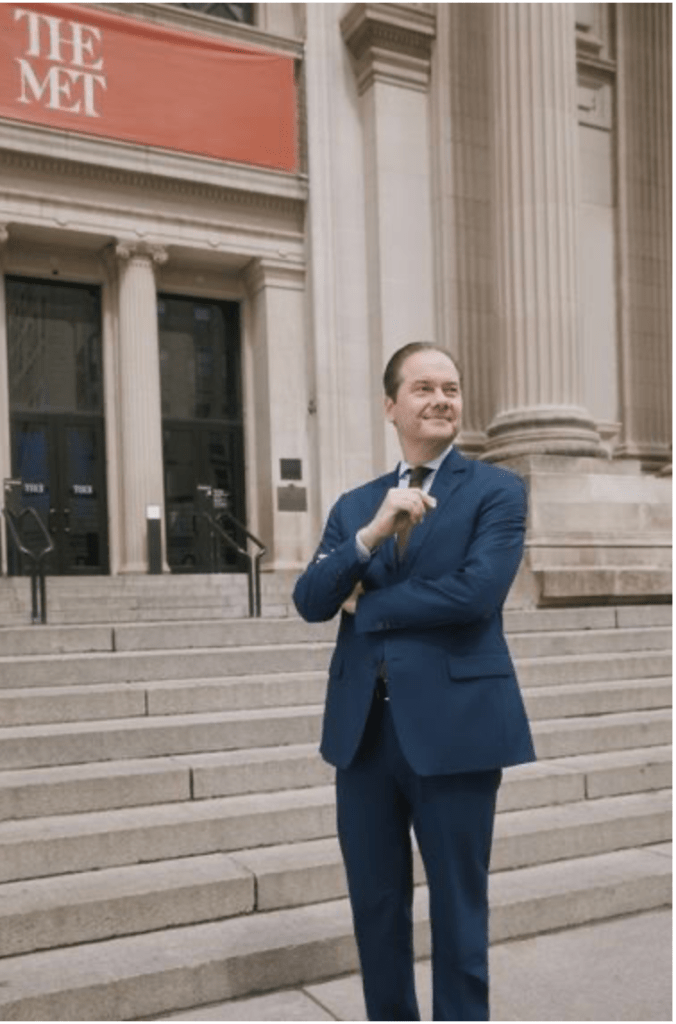
    Max Hollein, Marina Kellen French Director and Chief Executive Officer of The Metropolitan Museum of Art, New York. (The Metropolitan Museum of Art, 2025a)

    Diversity, Equity, Accessibility and Inclusion within Business/Management

    The importance to include DEAI in the role of business/management in a museum is observed through efforts of the leaders. Hiring people who reflect the culture and narrative represented in the museum is a crucial endeavor for leadership. As well as, emphasizing those stories through conent in the museum. In a conversation with Mr. Hollein from The Met (https://youtu.be/DH6rSEaaA44?si=__5XG_J2L7SJ5EYS) in December of 2024 where he discusses the exhibits the The Met will/have featured in 2025, he provides the example of an executive director committed to featuring a variety of cultural perspectives on the topic of human creativity represented in art (The Met, 2024).

    Qu Ding (Chinese, active ca. 1023–ca. 1056), Summer Mountains, ca1050. Featured in The Met’s exhibition “Recasting the Past: The Art of Chinese Bronzes, 1100–1900” (The Metropolitan Museum of Art, 2025b).

    Technology in Business/Management

    Business/management professionals use a wide range of technology for their roles. Technology is needed to organize, connect, calculate and communicate for these professionals.

    In reviewing job postings for business/management positions in a museum, technology proficiency is expected that can be specific to that responsibility. For example in order to perform in a marketing position in a museum, skills in CRM (Customer Relationship Management) software is needed (LinkedIn, 2025) to gather data that assists tracking the progress of sales, marketing efforts, and other analytics. While a finance and operational role in a museum can be expected to have “expertise in Microsoft Office Suite and the Workday suite”, as well as “interest in learning” project management software, JIRA (LinkedIn, 2025b).

    Reflection

    This area of the museum contains numerous functions with a variety of skillsets needed to fill those roles. From accounting to marketing to strategic planning, there are opportunities for those who have the background. I actually have that background, but find that I do not want to continue my career under the business/management umbrella

    Working as a project manager for a telecommunications with an MBA that provided the preparation to utilize the technology, planning, leadership and communication skills need for role, I found the work to be not as creatively stimulating as I would have enjoyed. Also, I have managed the finance and operations for a small marketing firm. The skills gained in a business/management postion does have the advantage to be able to work in various types of industries. However, the work itself can be routine.

    Of all the core areas of the museum that I have studied, this area would not be an area I hope to transition into when I have completed my museum studies program. The job postings reviewed and the challenges we studied for this area of the museum do not spark a desire to return to those types of roles.

    References:

  • Education Department

    “An investment in knowledge pays the best interest.” – Benjamin Franklin

    Saturday morning art lessons, lectures from visiting artists, docent guided tours, and cultural festivals are just a few examples of how a museum’s Education Department provides an essential role in interpreting the physical pieces the museum displays. This post describes the importance of the Education Department in a museum, along with the challenges this varied area faces.

    Figure 1.Día de los Muertos Festival at The Nelson-Atkins Museum of Art, Kansas City, MO (Nelson-Atkins, 2025a).

    Defining the Education Department in a Museum

    The Education department in a museum is a complex translation team. A team of program managers, education coordinators, volunteer coordinators, interpreters (docents, museum guides, etc.) (Young,2019) and, most likely, many volunteers commit their skills, efforts and time to engaging their visitors, whether they are in person or virtually, with the cultural material in the museum.

    “Museum education.. is about communicating messages, creating learning experiences, and, at its most aspirational, promoting human development for people of all backgrounds, abilities, and circumstances” (Wood, 2023).

    Program Managers

    The program manager is the train conductor of the team. With the responsibility to develop the offerings of the education department, this staff members works with external contacts to build relationships, as well as internal staff to implement the programs (Young,2019).

    Education Coordinators

    The education coordinator manages the details of the education department’s programs. From sorting the logistics of the activities to booking group tours, the ed coordinator works to ensure the details of tours and other events are covered (Young,2019).

    Volunteer Coordinators

    The volunteer coordinator is the supervisor to all of the volunteers at the museum. This staff member works with other staff to identify where help is needed and define those roles clearly for the volunteers. The coordinator also selects, trains, and fields concerns or feedback from the volunteers (Young,2019).

    I love this video of “Docent Pam”. Notice the key words she uses when describing her work: engage and learn (Anthony Museum, 2020).

    Responsibility of the Interpreter

    The interpreters in a museum implement the educational programs with the public through various positions. Through roles such as tour guides, docents, or as a museum teacher, this staff member (or volunteer) performs as the name describes, he/she “interprets” the content for their audience; children, teens, adults and/or fellow educators (Young, 2019). The interpreter will utilize predefined material(s) developed in the education department for their interactions with the public (Young, 2019). Various methods, such as discussions, demonstrations, and questions, are used for the exchange between interpreter and museum guest (Young, 2019).

    May be an image of 7 people

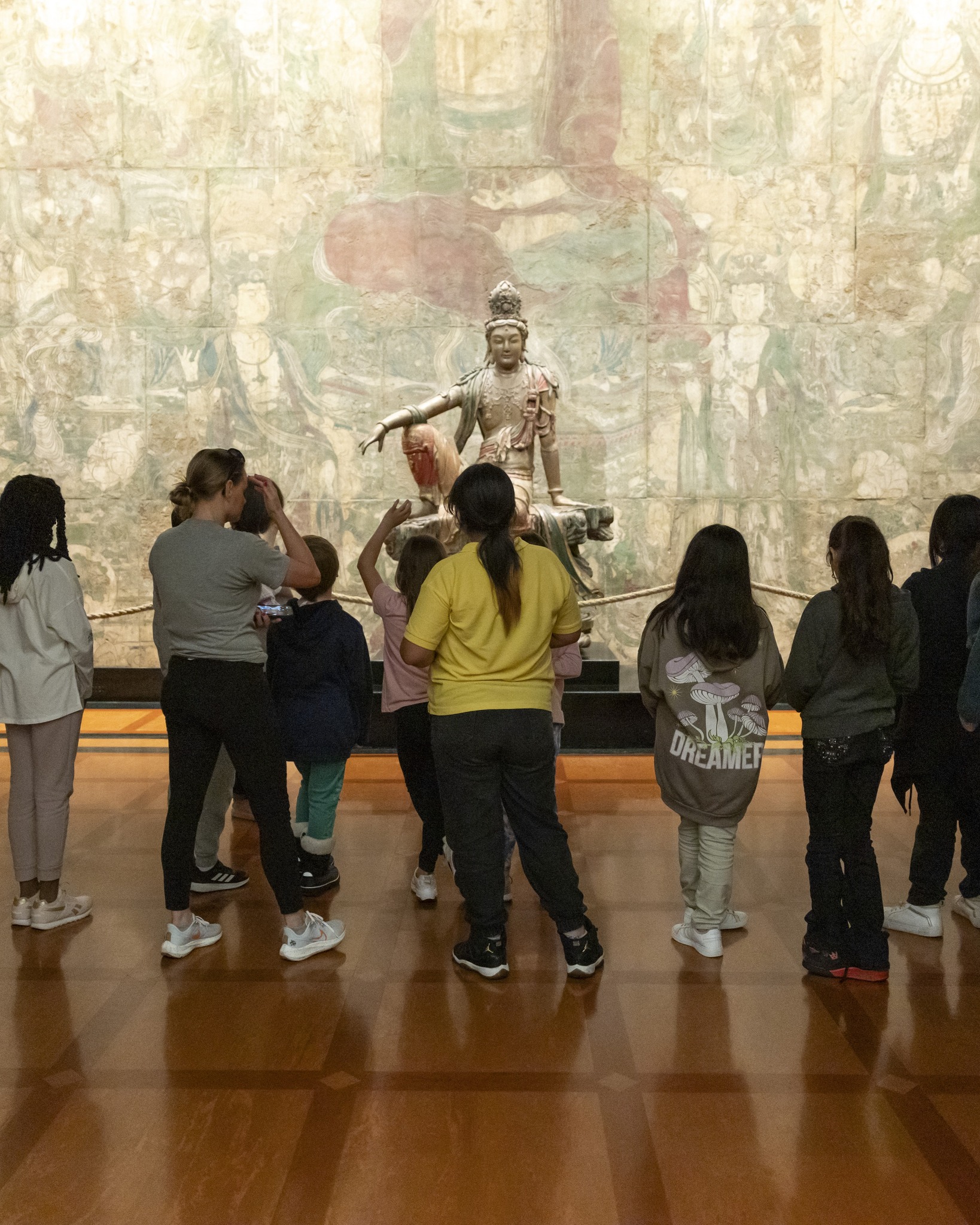
    The variety of guests who visit a museum requires the ability for education professionals to engage with all ages. Here, young students are learning about Buddhist art (Nelson-Atkins, 2025b).

    Technology opportunities for the Education Department

    The Education Department can utilize technology for not only guests visiting the museum, but also as an outreach tool for online learning. Through the use of free digital platforms such as virtual tours via Zoom or the use of creative workshops that could be accessed on YouTube, educational professionals may be able to reach audiences that may not have access to visit a museum (Dumont, et al., 2024). 

    A Compound Effect with Technology

    Teaching the teacher through technology is not only an effective tool, but it also produces a compounding effect on the reach when educators, especially those who educate teachers, are the recipients of museum education (Talboys, 2018). The efficiency of the museum education professional’s time by utilizing “basic knowledge of educational theory and having a set of quality arguments”  (Talboys, 2018) to instruct, as well as convince, teachers and teachers of teachers of the value museum education can add to their curriculum, is not only far reaching, but can also be a cost savings. These outcomes, greater attendance and cost savings, are at the center of most museums’ missions. 

    This video that has been produced for teachers, provides tips for engaging students when discussing art from an educator at The Museum of Modern Art (MoMA, 2013).

    Diversity, Equity, Accessibility, and Inclusion can be incorporated with the care from Education Department

    Accessibility to the programs designed and implemented by the education department in museums has challenges. From the physical location of the museum that some may not have access to, as well as the admission price, or the digital offerings a museum shares online can be a barrier to accessibility.

    Physical Access

    A challenge to accessibility for all happens when people do not have the means or are not physically able to visit a museum. Museums can strive to include robust, educational content on their website. While all museums have various degrees of content available online, the education department can utilize their skills to design and implement thoughtful material that fits within technology and budget restrictions. For example, a TikTok video of a new piece in the museum, with a link to access more information in the bio of the account, would be a solution for most likely younger patrons.

    Admission Price

    Admission fees can be a barrier to accessibility that is an all museum opportunity to solve, not only the education department. The museum leadership have a challenge to identify moments or events that could be a “reduced or free” admission day for various reasons or demographics; i.e., free for students and seniors. The museum where I volunteer a donor has provided funding so that admission is free at all times. While not all museums may have that resource, creativity is needed to be able to welcome anyone who wants to visit.

    Access to Online Options

    We saw during the pandemic the urgency to deliver educational content to those in rural communities who may have been isolated from educational enrichment (Porter, et al., 2023). Not only are rural communities at risk, the elderly, low income, and others who cannot attend in person are potential “digital visitors”. But, for many, access to technology can be a barrier. Possible solutions can be utilizing public spaces with computer access for free or a minimal fee, such as libraries, schools or non profit agencies who offer the service.

    No photo description available.

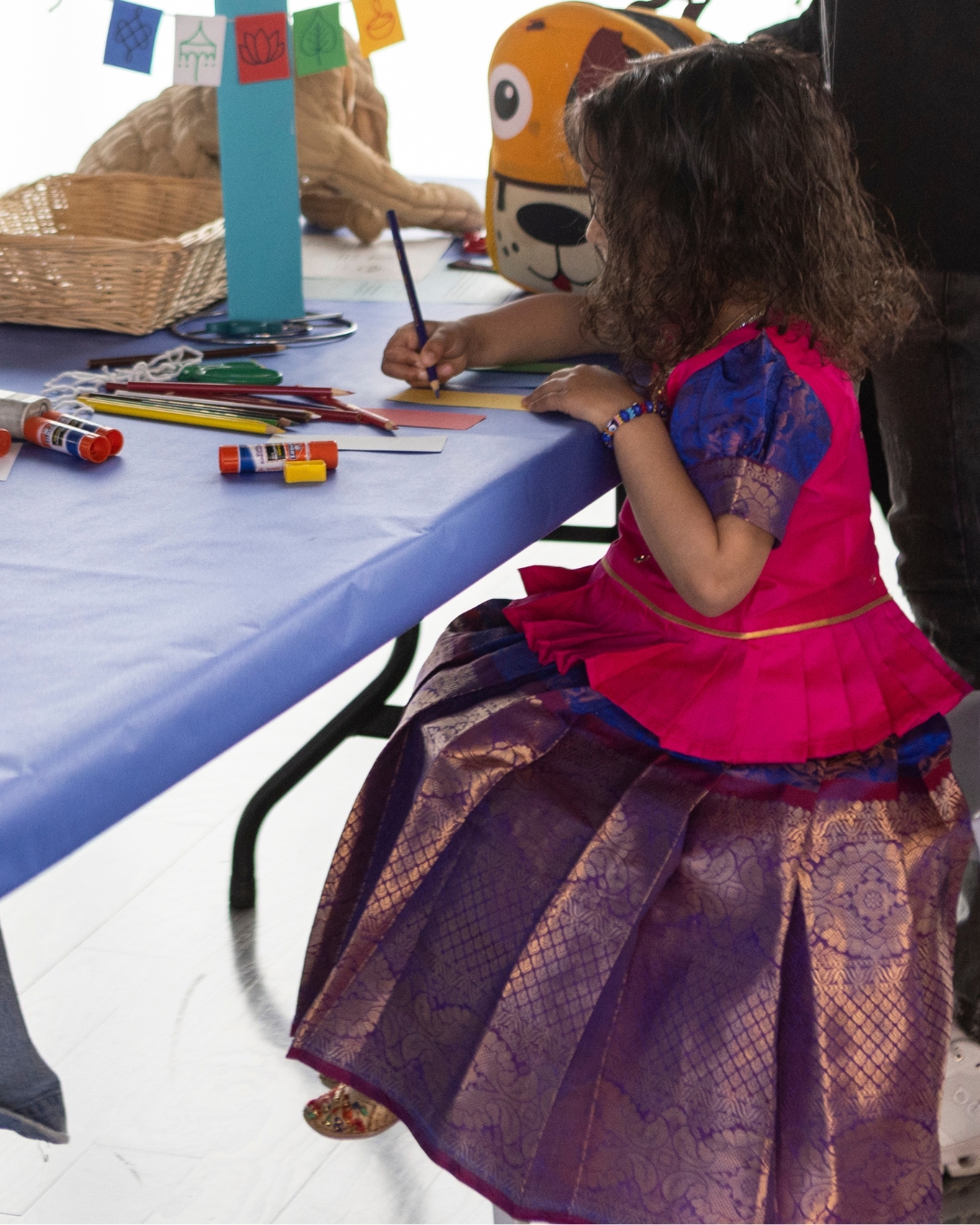
    A young visitor creates symbols of India at The Nelson-Atkins Museum of Art’s cultural festival, Passport to India (Nelson-Atkins, 2025c).

    Reflection

    In my experience as a museum guest, I have attended artist presentations, curator discussions, docent tours, art classes and chatted with museum guides during their presentations by specific pieces in a gallery. All of these interactions are available through the efforts of the education departments in those museums. Each educational experience brought to life and provided further cultural context to the piece or collection being presented.

    As a volunteer at The Nelson-Atkins Museum of Art, a popular event that I enjoy assisting the education department’s efforts in is a cultural festival, Passage to India. My role has been helping younger guests with art projects that have been developed by the department to offer a tactile, creative activity that represents the rich culture of India.

    These types of experiences are examples of the investment being made by the museums’ educational departments to engage and interpret their collections with the community in person or online. As Ben Franklin notably said, “knowledge pays interest”. The “interest” gained in these efforts feed the curiosity and awareness of cultural material by the community engaging in these programs. Through the compounding effect of teaching educators, the investment and interest exponentially grows. While finding creative solutions to break down accessibility barriers is ever present to ensure equal access, the continuing efforts of the museum as a whole to find solutions provides opportunities for museums to succeed in their missions.

    Resources

    • Anthony Museum. (April 9, 2020). Anthony Museum docent Pam Ryan shares why she loves giving tours. YouTube. Retrieved October 18, 2025 from https://www.youtube.com/shorts/08ElqM1gIOM
    • Dumont, C., De Backer, F., Dewinter, H., & Vandermeersche, G. (2024). Museum educators’ views on digital museum education: opportunities and challenges. Cultural Trends, 1–16. https://doi.org/10.1080/09548963.2024.2378324
    • MoMA. (December 30, 2013). Five Tips for Teaching with Works of Art| MoMA VIDEOS FOR TEACHERS. The Museum of Modern Art. Retrieved October 19th, 2025 from https://youtu.be/ONPYKR8jNn8?si=0cWMwLUsegfUkWHC
    • Nelson-Atkins. (2025a). Día de los Metros Festival Event. [Photograph] The Nelson-Atkins Museum of Art Facebook Events Page. Retrieved October 18, 2025 from https://www.facebook.com/nelsonatkins
    • Nelson-Atkins. (2025b). Post dated August 22, 2025. [Photograph] The Nelson-Atkins Museum of Art Facebook Events Page. Retrieved October 18, 2025 from https://www.facebook.com/nelsonatkins
    • Nelson-Atkins. (2025c). Post dated April 16, 2025. [Photograph] The Nelson-Atkins Museum of Art Facebook Events Page. Retrieved October 19, 2025 from https://www.facebook.com/nelsonatkins
    • Porter, J., M.K. Cunningham, M. Leftwich (2023, July-August). “Leading from the Front Lines.” Museum. pp.14-16.  
    • Talboys, G. K. (2018). Museum Educator’s Handbook / Graeme K Talboys. (First edition.). Taylor and Francis. https://doi.org/10.4324/9781315212432
    • Wood, E. J. (Ed.). (2023). A new role for museum educators: purpose, approach, and mindset / edited by Elizabeth Wood. Routledge.
    • Young, T. (2019).  So you Want to work in a Museum. Rowman & Littlefield, MD. [Chapter 4: Education pp.31-45] 

  • Collections

    “The more specific we are, the more universal something can become. Life is in the details…” – Jacqueline Woodson 

    The Collections department brings to life the cultural heritage in museums through the tasks performed defined under their role. These efforts help identify an accurate description of an object or specimen, as well as the context of how it came to be located where it is today. The more accurate the description, the better acknowledgment of our cultural narrative.

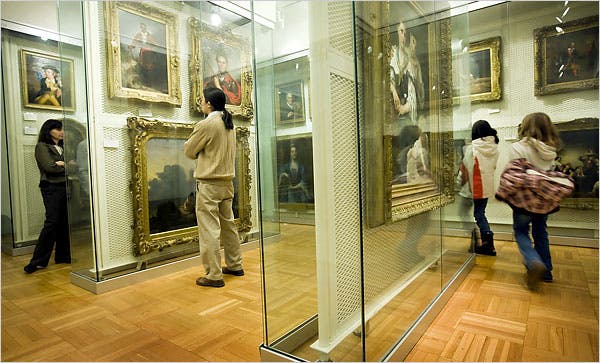
    Figure 1. An open storage gallery at the New-York Historical Society. (Patterson, 2009).

    How does the Collections department shape the museum experience?

    From keeping the physical condition of objects pristine to accurately documenting the particular objects, those who work in collections can be responsible for many aspects caring for the pieces in a museum (Young, 2019).

    Crafting storage containers that are properly constructed, to monitoring lighting and/or humidity in a gallery space, the collection manager ensures the condition of an object or specimen is optimal (Young, 2019). As well as physical attention, the collections manager verifies and updates the accuracy of the description of items to accurately communicate the context of the object (Young, 2019).

    The conditions of an exhibition need to be monitored to ensure those items on display are protected. If a particular item is light sensitive, it may need to be rotated in and out of the exhibition to ensure it will not be damaged. If it is a hot and humid summer in Kansas City, NAMA collections department employees will be tracking the humidity in the galleries.

    Figure 2 Chinese art objects at The Nelson-Atkins Museum of Art. (Nelson-Atkins, 2025).

    Two Roles rolled into one, as well as the importance of Historical Context

    Depending on the size of the institution and the funds available for staffing, the lines between a Collection Manager and a Registrar could be one of the same (Young, 2019). These combined roles would place a wide range of tasks for one department or individual. As noted, activities such as physical care of objects and documentation would be included in this area, but also extensive database work. The database is a critical tool in keeping track of what, who, where and how (and when!) an object came to a museum.

    Details describing a piece can be static, no updates needed, but if the knowledge has expanded, the Collections team will ensure the accuracy.

    Tracking the history, the provenance, of objects and specimens in a collection is a task that is a driver to bringing life in the details (Young, 2019).

    Technology assists the process in Collections.

    Database experience and proficiency is critical in the Collections department (Young, 2019). While different institutions will utilize differing software systems, individuals working in Collections should be able to adapt to each of these systems with the similar type of data tracked.

    An example of a database management systems is the TMS Collections by GallerySystems:

    https://www.gallerysystems.com

    With the information from the database, the placard for guests to view can be the most accurate and a catalyst for learning the true context of such objects.

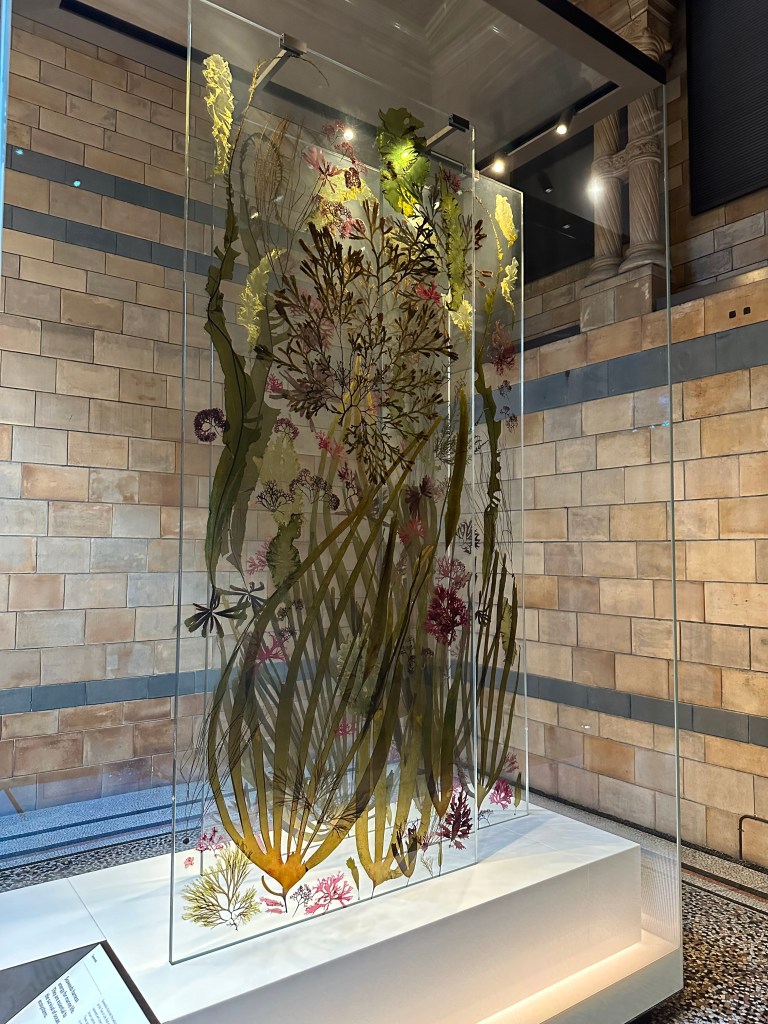
    Figures 3 & 4: Photos from The Natural History Museum in London, U.K. Figure 3, the description placard for the piece, Seaweeds. Figure 4, Seaweeds. (Photos: Personal)

    Diversity, Equity, Accessibility, and Inclusion can be incorporated with the care from Collections

    In this post, I work to use the terms “objects or specimens” to describe cultural material in museums. This is in the effort to bring inclusion into the conversation. Bazan, et al., discuss how Collections can “expand” descriptions to include the colonial history (2021). By updating the history of an object and utilize a more accurate term such as “bones, specimen and/or remains” Collections departments are increasing the inclusion of the those pieces in their rightful cultural identification(Bazan, et al., 2021)

    “(Museums) might benefit if they further contextualize the origins of their collections for their visitors, and if they raise awareness of historical injustices embedded in their institutional histories. This would work both to establish trust with Indigenous source communities, as well as ease fears about “empty museums” and to render local visitors’ acceptance and support for repatriation” -Nike Thurn (Bazan, et. al, 2021).


    The following YouTube video describes not only the original legislation for The Native American Graves Protection and Repatriation Act, but also the updated regulations added in 2024. (Treuer, 2024).

    How have I experienced Collections?

    My experience up to this point is that of a museum guest or a volunteer with my local museum. I have benefited from the work those in the Collections departments have tirelessly given to their institutions by the depth of information available for the pieces observed and the placards with information.

    In the Native American exhibit at my local museum, The Nelson Atkins Museum of Art, artifacts, whether they are specimens, remains, or other objects, have been covered in the gallery as the discussions between the museum and local Tribal authorities discuss the repatriation of the items. I appreciate the display of covering the items rather than pulling them from the exhibition floor. This provides a visual to museum guests of the work being done in the efforts of repatriation.

    Wrapping it Up

    The Collections area in a museum is key in preserving the cultural heritage. Whether in a possible combined role with registration or a stand alone position, it is the backbone of the museum by ensuring the care of the collection, piece by piece. The task of ensuring accuracy in the description of the collection and updating the context of those pieces through the maintenance of the museum’s database is an avenue for inclusion.

    Resources

    Avgousti, A., & Papaioannou, G. (2023). The Current State and Challenges in Democratizing Small Museums’ Collections Online. Information Technology and Libraries, 42(1), 1–15. https://doi.org/10.6017/ital.v42i1.14099

    Bazan, E., Black, S. W., Thurn, N., & Usbeck, F. (2021). Repatriation, Public Programming, and the DEAI Toolkit. Journal of Museum Education, 46(1), 27–37. https://doi-org.proxy1.library.jhu.edu/10.1080/10598650.2020.1847501

    GallerySystems. (2025). Home page. Gallery Systems, Inc. Retrieved September 29, 2025 from https://www.gallerysystems.com

    Nelson-Atkins. (2025). Minds in Motion: A Trip to China!. [Photograph] The Nelson-Atkins Museum of Art Facebook Events Page. Retrieved September 28, 2025 from https://www.facebook.com/events/1330507375246540?acontext=%7B%22event_action_history%22%3A[%7B%22mechanism%22%3A%22attachment%22%2C%22surface%22%3A%22newsfeed%22%7D]%2C%22ref_notif_type%22%3Anull%7D

    Patterson, R. (2009). The Good Stuff in the Back of the Room. [Photograph]. The New York Times. Retrieved September 29, 2025 from https://www.nytimes.com/2009/03/19/arts/artsspecial/19TROVE.html

    Treuer, A. (November 28, 2024). Unearthing Truth: The Native American Graves Protection and Repatriation Act Explained. YouTube. Retrieved September 28, 2025 from https://www.youtube.com/watch?v=KUPQWP7GQwQ

    Young, T. (2019). So you Want to work in a Museum. Rowman & Littlefield, MD. [Chapter 5: Working with Objects pp.45-56]