“The more specific we are, the more universal something can become. Life is in the details…” – Jacqueline Woodson
The Collections department brings to life the cultural heritage in museums through the tasks performed defined under their role. These efforts help identify an accurate description of an object or specimen, as well as the context of how it came to be located where it is today. The more accurate the description, the better acknowledgment of our cultural narrative.
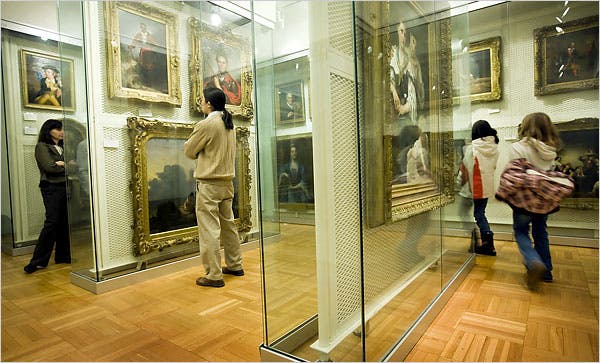
Figure 1. An open storage gallery at the New-York Historical Society. (Patterson, 2009).
How does the Collections department shape the museum experience?
From keeping the physical condition of objects pristine to accurately documenting the particular objects, those who work in collections can be responsible for many aspects caring for the pieces in a museum (Young, 2019).
Crafting storage containers that are properly constructed, to monitoring lighting and/or humidity in a gallery space, the collection manager ensures the condition of an object or specimen is optimal (Young, 2019). As well as physical attention, the collections manager verifies and updates the accuracy of the description of items to accurately communicate the context of the object (Young, 2019).
The conditions of an exhibition need to be monitored to ensure those items on display are protected. If a particular item is light sensitive, it may need to be rotated in and out of the exhibition to ensure it will not be damaged. If it is a hot and humid summer in Kansas City, NAMA collections department employees will be tracking the humidity in the galleries.

Figure 2 Chinese art objects at The Nelson-Atkins Museum of Art. (Nelson-Atkins, 2025).
Two Roles rolled into one, as well as the importance of Historical Context
Depending on the size of the institution and the funds available for staffing, the lines between a Collection Manager and a Registrar could be one of the same (Young, 2019). These combined roles would place a wide range of tasks for one department or individual. As noted, activities such as physical care of objects and documentation would be included in this area, but also extensive database work. The database is a critical tool in keeping track of what, who, where and how (and when!) an object came to a museum.
Details describing a piece can be static, no updates needed, but if the knowledge has expanded, the Collections team will ensure the accuracy.
Tracking the history, the provenance, of objects and specimens in a collection is a task that is a driver to bringing life in the details (Young, 2019).
Technology assists the process in Collections.
Database experience and proficiency is critical in the Collections department (Young, 2019). While different institutions will utilize differing software systems, individuals working in Collections should be able to adapt to each of these systems with the similar type of data tracked.
An example of a database management systems is the TMS Collections by GallerySystems:
https://www.gallerysystems.com
With the information from the database, the placard for guests to view can be the most accurate and a catalyst for learning the true context of such objects.

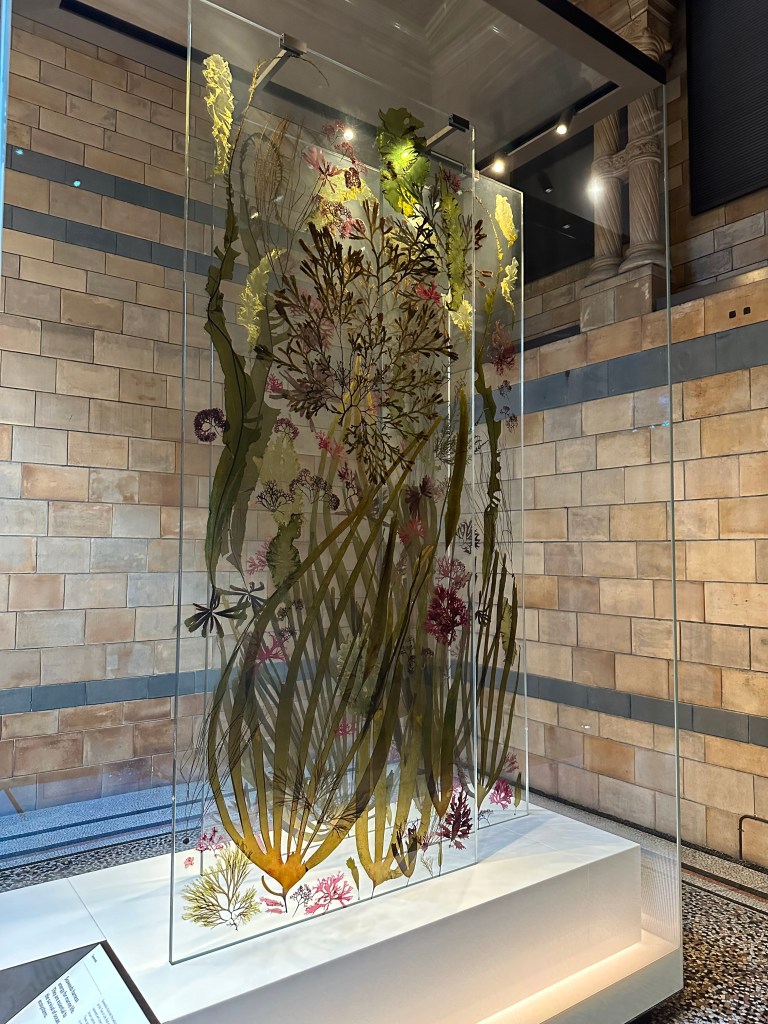
Figures 3 & 4: Photos from The Natural History Museum in London, U.K. Figure 3, the description placard for the piece, Seaweeds. Figure 4, Seaweeds. (Photos: Personal)
Diversity, Equity, Accessibility, and Inclusion can be incorporated with the care from Collections
In this post, I work to use the terms “objects or specimens” to describe cultural material in museums. This is in the effort to bring inclusion into the conversation. Bazan, et al., discuss how Collections can “expand” descriptions to include the colonial history (2021). By updating the history of an object and utilize a more accurate term such as “bones, specimen and/or remains” Collections departments are increasing the inclusion of the those pieces in their rightful cultural identification(Bazan, et al., 2021)
“(Museums) might benefit if they further contextualize the origins of their collections for their visitors, and if they raise awareness of historical injustices embedded in their institutional histories. This would work both to establish trust with Indigenous source communities, as well as ease fears about “empty museums” and to render local visitors’ acceptance and support for repatriation” -Nike Thurn (Bazan, et. al, 2021).
The following YouTube video describes not only the original legislation for The Native American Graves Protection and Repatriation Act, but also the updated regulations added in 2024. (Treuer, 2024).
How have I experienced Collections?
My experience up to this point is that of a museum guest or a volunteer with my local museum. I have benefited from the work those in the Collections departments have tirelessly given to their institutions by the depth of information available for the pieces observed and the placards with information.
In the Native American exhibit at my local museum, The Nelson Atkins Museum of Art, artifacts, whether they are specimens, remains, or other objects, have been covered in the gallery as the discussions between the museum and local Tribal authorities discuss the repatriation of the items. I appreciate the display of covering the items rather than pulling them from the exhibition floor. This provides a visual to museum guests of the work being done in the efforts of repatriation.
Wrapping it Up
The Collections area in a museum is key in preserving the cultural heritage. Whether in a possible combined role with registration or a stand alone position, it is the backbone of the museum by ensuring the care of the collection, piece by piece. The task of ensuring accuracy in the description of the collection and updating the context of those pieces through the maintenance of the museum’s database is an avenue for inclusion.
Resources
Avgousti, A., & Papaioannou, G. (2023). The Current State and Challenges in Democratizing Small Museums’ Collections Online. Information Technology and Libraries, 42(1), 1–15. https://doi.org/10.6017/ital.v42i1.14099
Bazan, E., Black, S. W., Thurn, N., & Usbeck, F. (2021). Repatriation, Public Programming, and the DEAI Toolkit. Journal of Museum Education, 46(1), 27–37. https://doi-org.proxy1.library.jhu.edu/10.1080/10598650.2020.1847501
GallerySystems. (2025). Home page. Gallery Systems, Inc. Retrieved September 29, 2025 from https://www.gallerysystems.com
Nelson-Atkins. (2025). Minds in Motion: A Trip to China!. [Photograph] The Nelson-Atkins Museum of Art Facebook Events Page. Retrieved September 28, 2025 from https://www.facebook.com/events/1330507375246540?acontext=%7B%22event_action_history%22%3A[%7B%22mechanism%22%3A%22attachment%22%2C%22surface%22%3A%22newsfeed%22%7D]%2C%22ref_notif_type%22%3Anull%7D
Patterson, R. (2009). The Good Stuff in the Back of the Room. [Photograph]. The New York Times. Retrieved September 29, 2025 from https://www.nytimes.com/2009/03/19/arts/artsspecial/19TROVE.html
Treuer, A. (November 28, 2024). Unearthing Truth: The Native American Graves Protection and Repatriation Act Explained. YouTube. Retrieved September 28, 2025 from https://www.youtube.com/watch?v=KUPQWP7GQwQ
Young, T. (2019). So you Want to work in a Museum. Rowman & Littlefield, MD. [Chapter 5: Working with Objects pp.45-56]
 On A Journey
Leave a comment