“An investment in knowledge pays the best interest.” – Benjamin Franklin
Saturday morning art lessons, lectures from visiting artists, docent guided tours, and cultural festivals are just a few examples of how a museum’s Education Department provides an essential role in interpreting the physical pieces the museum displays. This post describes the importance of the Education Department in a museum, along with the challenges this varied area faces.

Figure 1.Día de los Muertos Festival at The Nelson-Atkins Museum of Art, Kansas City, MO (Nelson-Atkins, 2025a).
Defining the Education Department in a Museum
The Education department in a museum is a complex translation team. A team of program managers, education coordinators, volunteer coordinators, interpreters (docents, museum guides, etc.) (Young,2019) and, most likely, many volunteers commit their skills, efforts and time to engaging their visitors, whether they are in person or virtually, with the cultural material in the museum.
“Museum education.. is about communicating messages, creating learning experiences, and, at its most aspirational, promoting human development for people of all backgrounds, abilities, and circumstances” (Wood, 2023).
Program Managers
The program manager is the train conductor of the team. With the responsibility to develop the offerings of the education department, this staff members works with external contacts to build relationships, as well as internal staff to implement the programs (Young,2019).
Education Coordinators
The education coordinator manages the details of the education department’s programs. From sorting the logistics of the activities to booking group tours, the ed coordinator works to ensure the details of tours and other events are covered (Young,2019).
Volunteer Coordinators
The volunteer coordinator is the supervisor to all of the volunteers at the museum. This staff member works with other staff to identify where help is needed and define those roles clearly for the volunteers. The coordinator also selects, trains, and fields concerns or feedback from the volunteers (Young,2019).
I love this video of “Docent Pam”. Notice the key words she uses when describing her work: engage and learn (Anthony Museum, 2020).
Responsibility of the Interpreter
The interpreters in a museum implement the educational programs with the public through various positions. Through roles such as tour guides, docents, or as a museum teacher, this staff member (or volunteer) performs as the name describes, he/she “interprets” the content for their audience; children, teens, adults and/or fellow educators (Young, 2019). The interpreter will utilize predefined material(s) developed in the education department for their interactions with the public (Young, 2019). Various methods, such as discussions, demonstrations, and questions, are used for the exchange between interpreter and museum guest (Young, 2019).
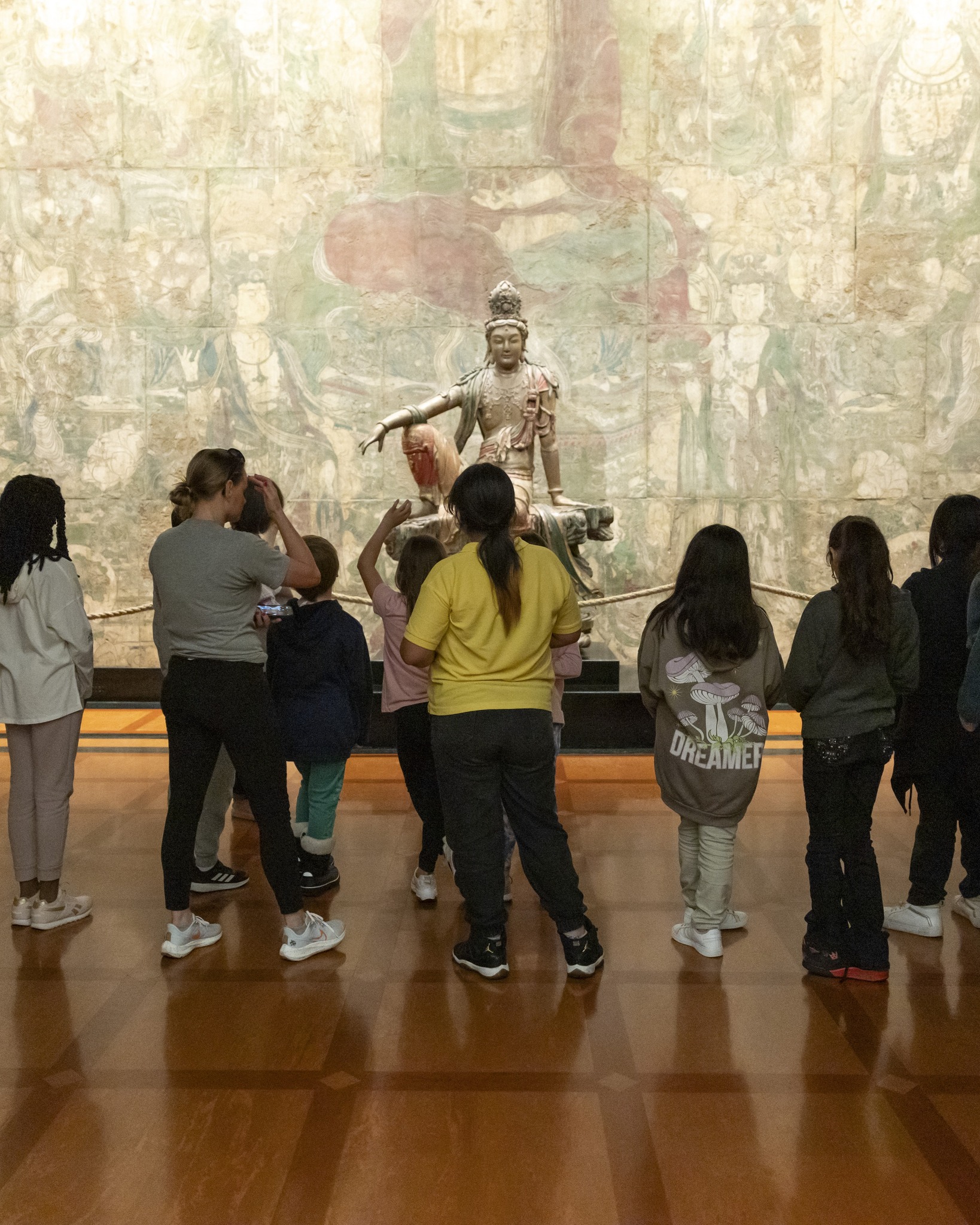
The variety of guests who visit a museum requires the ability for education professionals to engage with all ages. Here, young students are learning about Buddhist art (Nelson-Atkins, 2025b).
Technology opportunities for the Education Department
The Education Department can utilize technology for not only guests visiting the museum, but also as an outreach tool for online learning. Through the use of free digital platforms such as virtual tours via Zoom or the use of creative workshops that could be accessed on YouTube, educational professionals may be able to reach audiences that may not have access to visit a museum (Dumont, et al., 2024).
A Compound Effect with Technology
Teaching the teacher through technology is not only an effective tool, but it also produces a compounding effect on the reach when educators, especially those who educate teachers, are the recipients of museum education (Talboys, 2018). The efficiency of the museum education professional’s time by utilizing “basic knowledge of educational theory and having a set of quality arguments” (Talboys, 2018) to instruct, as well as convince, teachers and teachers of teachers of the value museum education can add to their curriculum, is not only far reaching, but can also be a cost savings. These outcomes, greater attendance and cost savings, are at the center of most museums’ missions.
This video that has been produced for teachers, provides tips for engaging students when discussing art from an educator at The Museum of Modern Art (MoMA, 2013).
Diversity, Equity, Accessibility, and Inclusion can be incorporated with the care from Education Department
Accessibility to the programs designed and implemented by the education department in museums has challenges. From the physical location of the museum that some may not have access to, as well as the admission price, or the digital offerings a museum shares online can be a barrier to accessibility.
Physical Access
A challenge to accessibility for all happens when people do not have the means or are not physically able to visit a museum. Museums can strive to include robust, educational content on their website. While all museums have various degrees of content available online, the education department can utilize their skills to design and implement thoughtful material that fits within technology and budget restrictions. For example, a TikTok video of a new piece in the museum, with a link to access more information in the bio of the account, would be a solution for most likely younger patrons.
Admission Price
Admission fees can be a barrier to accessibility that is an all museum opportunity to solve, not only the education department. The museum leadership have a challenge to identify moments or events that could be a “reduced or free” admission day for various reasons or demographics; i.e., free for students and seniors. The museum where I volunteer a donor has provided funding so that admission is free at all times. While not all museums may have that resource, creativity is needed to be able to welcome anyone who wants to visit.
Access to Online Options
We saw during the pandemic the urgency to deliver educational content to those in rural communities who may have been isolated from educational enrichment (Porter, et al., 2023). Not only are rural communities at risk, the elderly, low income, and others who cannot attend in person are potential “digital visitors”. But, for many, access to technology can be a barrier. Possible solutions can be utilizing public spaces with computer access for free or a minimal fee, such as libraries, schools or non profit agencies who offer the service.
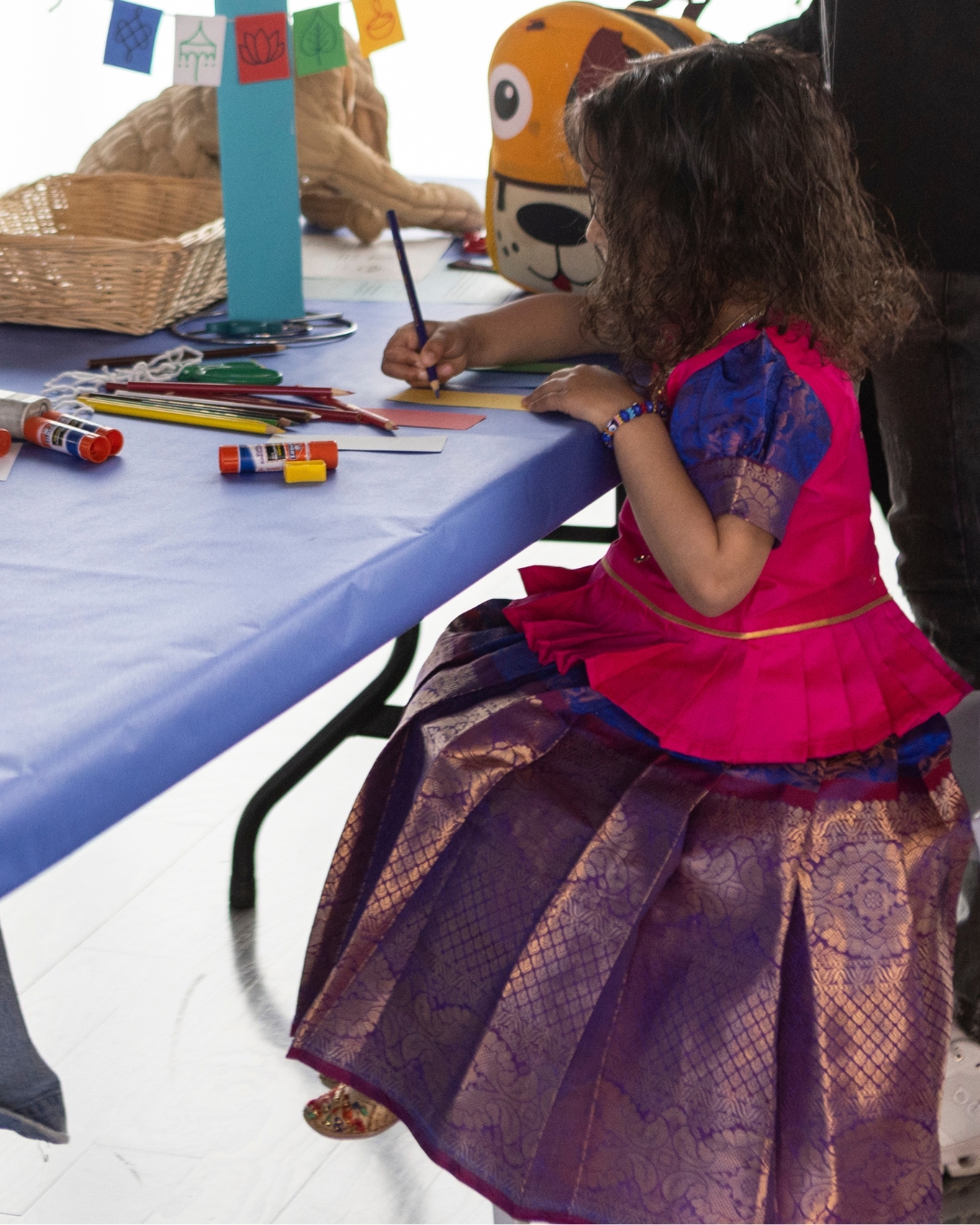
A young visitor creates symbols of India at The Nelson-Atkins Museum of Art’s cultural festival, Passport to India (Nelson-Atkins, 2025c).
Reflection
In my experience as a museum guest, I have attended artist presentations, curator discussions, docent tours, art classes and chatted with museum guides during their presentations by specific pieces in a gallery. All of these interactions are available through the efforts of the education departments in those museums. Each educational experience brought to life and provided further cultural context to the piece or collection being presented.
As a volunteer at The Nelson-Atkins Museum of Art, a popular event that I enjoy assisting the education department’s efforts in is a cultural festival, Passage to India. My role has been helping younger guests with art projects that have been developed by the department to offer a tactile, creative activity that represents the rich culture of India.
These types of experiences are examples of the investment being made by the museums’ educational departments to engage and interpret their collections with the community in person or online. As Ben Franklin notably said, “knowledge pays interest”. The “interest” gained in these efforts feed the curiosity and awareness of cultural material by the community engaging in these programs. Through the compounding effect of teaching educators, the investment and interest exponentially grows. While finding creative solutions to break down accessibility barriers is ever present to ensure equal access, the continuing efforts of the museum as a whole to find solutions provides opportunities for museums to succeed in their missions.
Resources
- Anthony Museum. (April 9, 2020). Anthony Museum docent Pam Ryan shares why she loves giving tours. YouTube. Retrieved October 18, 2025 from https://www.youtube.com/shorts/08ElqM1gIOM
- Dumont, C., De Backer, F., Dewinter, H., & Vandermeersche, G. (2024). Museum educators’ views on digital museum education: opportunities and challenges. Cultural Trends, 1–16. https://doi.org/10.1080/09548963.2024.2378324
- MoMA. (December 30, 2013). Five Tips for Teaching with Works of Art| MoMA VIDEOS FOR TEACHERS. The Museum of Modern Art. Retrieved October 19th, 2025 from https://youtu.be/ONPYKR8jNn8?si=0cWMwLUsegfUkWHC
- Nelson-Atkins. (2025a). Día de los Metros Festival Event. [Photograph] The Nelson-Atkins Museum of Art Facebook Events Page. Retrieved October 18, 2025 from https://www.facebook.com/nelsonatkins
- Nelson-Atkins. (2025b). Post dated August 22, 2025. [Photograph] The Nelson-Atkins Museum of Art Facebook Events Page. Retrieved October 18, 2025 from https://www.facebook.com/nelsonatkins
- Nelson-Atkins. (2025c). Post dated April 16, 2025. [Photograph] The Nelson-Atkins Museum of Art Facebook Events Page. Retrieved October 19, 2025 from https://www.facebook.com/nelsonatkins
- Porter, J., M.K. Cunningham, M. Leftwich (2023, July-August). “Leading from the Front Lines.” Museum. pp.14-16.
- Talboys, G. K. (2018). Museum Educator’s Handbook / Graeme K Talboys. (First edition.). Taylor and Francis. https://doi.org/10.4324/9781315212432
- Wood, E. J. (Ed.). (2023). A new role for museum educators: purpose, approach, and mindset / edited by Elizabeth Wood. Routledge.
- Young, T. (2019). So you Want to work in a Museum. Rowman & Littlefield, MD. [Chapter 4: Education pp.31-45]


 On A Journey